 The original uploader was Yesuitus2001 at German Wikipedia. · CC BY-SA 2.5
to Swiss Alps
Eiger, Mönch and Jungfrau above two lakes
10 days · 1,584 km · by car, two people
Real routes and published prices — no guesses
- Fuel€19995 litres at an average €2.10 a litre
- Price per litre on the waySwitzerland €1.85 · United Kingdom €2.06 · Germany €2.18 · France €2.23
- Motorway tolls in France≈ €64An allowance: 581 tolled km at the country's usual rate — we don't hold its published tariff yet.
- M6 Toll€8.74Car (class 2)
- Dartford Crossing€4.13Class B: car (including when towing a trailer), motorhome, or minibus with 9 seats or fewer
- Dover–Calais ferry€135Car + up to 5 passengers
- Swiss motorway vignette€42.89One motor vehicle up to 3.5 t (car or motorhome) · 1 Dec 2025 – 31 Jan 2027 (14 months)
- 9 nights€952≈ €106 a night — every night is listed under “Where you'll sleep”
- Food€460≈ €46 a day for 10 days, cheap eats
Fuel: the EU Weekly Oil Bulletin, week of 2026-10-18. Tolls, vignettes and ferries: the operators' and authorities' published prices. Nights and food: typical prices in each country for the kind chosen.
- Dover–Calais ferry€135DFDS / P&O Ferries / Irish Ferries · about 1.7 h on board · Car + up to 5 passengers · The operator's prices
- Vignette for Switzerland€42.891 Dec 2025 – 31 Jan 2027 (14 months) · One motor vehicle up to 3.5 t (car or motorhome) · Buy it from the official seller
- Motorway tolls in France≈ €64An allowance: 581 tolled km at the country's usual rate — we don't hold its published tariff yet.
- M6 Toll€8.74
- Dartford Crossing€4.13
- Low-emission zoneLondon: ULEZ — £12.50/day if non-compliant (covers all Greater London)
- On the roadIn the French mountains, 1 November – 31 March, the signed communes of 34 departments want four 3PMSF tyres, or chains or snow socks for two driven wheels in the car.
- On the roadGermany sets no winter-tyre dates — the duty bites on ice, packed snow or slush, and then the tyres must carry the alpine symbol (three peaks and a snowflake).
Only official sellers are linked.
- Night 1 · Romford€74Scimitar House · hotel
- Night 2 · Dover€74Travelodge · hotel
- Night 3 · Laon€78L'hôtel de la bannière · hotel
- Night 4 · Interlaken€121Hapimag Belvédère · hotel
- Night 5 · Interlaken€121Hapimag Belvédère · hotel
- Night 6 · Interlaken€121Hapimag Belvédère · hotel
- Night 7 · Interlaken€121Hapimag Belvédère · hotel
- Night 8 · Interlaken€121Hapimag Belvédère · hotel
- Night 9 · Interlaken€121Hapimag Belvédère · hotel
Priced for budget hotels: typical prices in each country, not a booking.
Sources: EU weekly fuel bulletin · operators' published tariffs · Wikipedia · map © OpenStreetMap contributors
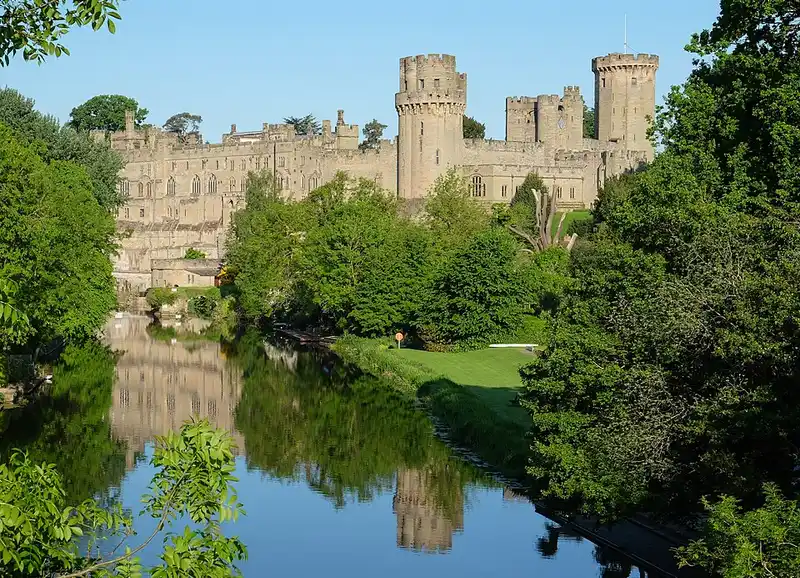
- Warwick CastleWarwick Castle is a medieval castle developed from a wooden fort originally built by William the Conqueror during 1068. The original wooden motte-and-bailey castle overlooking the River Avon was rebuilt in stone during the 12th century.205 km
Warwick Castle
Day 1 · 205 km into the day · a lunch stop
Warwick Castle is a medieval castle developed from a wooden fort originally built by William the Conqueror during 1068. The original wooden motte-and-bailey castle overlooking the River Avon was rebuilt in stone during the 12th century.
Wikipedia · DeFacto · CC BY-SA 4.0
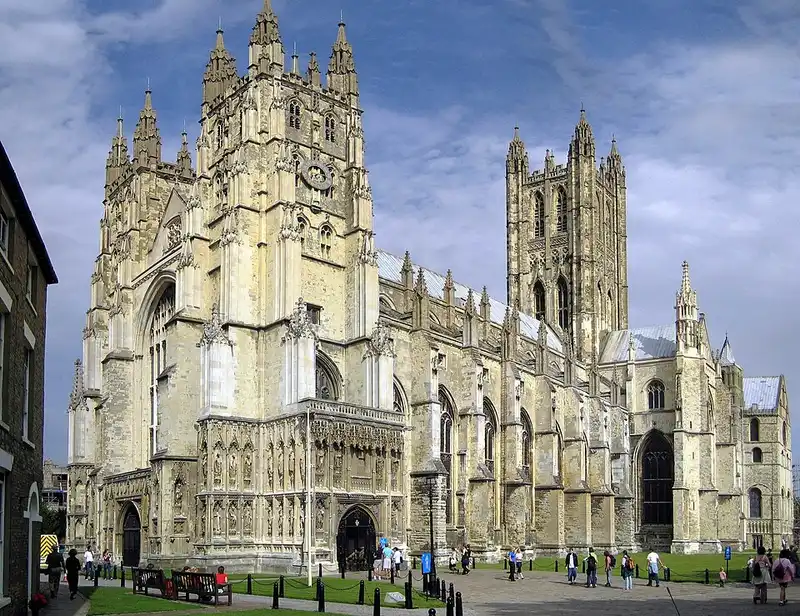
- Canterbury CathedralCanterbury Cathedral is the cathedral of the archbishop of Canterbury, the spiritual leader of the Church of England and symbolic leader of the worldwide Anglican Communion.495 km
Canterbury Cathedral
Day 2 · 27 km before tonight's stop
Located in Canterbury, Kent, it is on the site of one of the oldest Christian structures in England and forms part of a World Heritage Site.
Wikipedia · Hans Musil · CC BY-SA 4.0
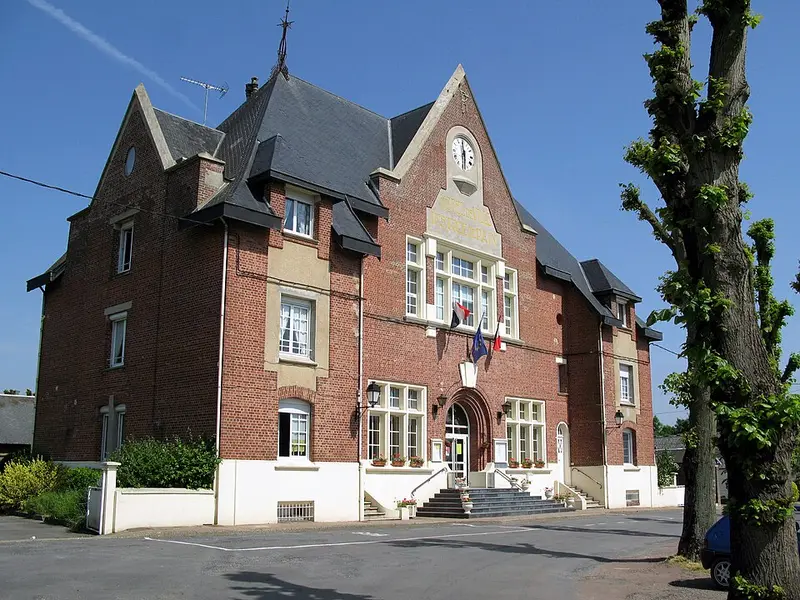
- VermandVermand is a commune in the Aisne department in Hauts-de-France in northern France.758 km
Vermand
Day 3 · 62 km before tonight's stop
Vermand is a commune in the Aisne department in Hauts-de-France in northern France.
Wikipedia · Markus3 (Marc ROUSSEL) · CC BY-SA 3.0
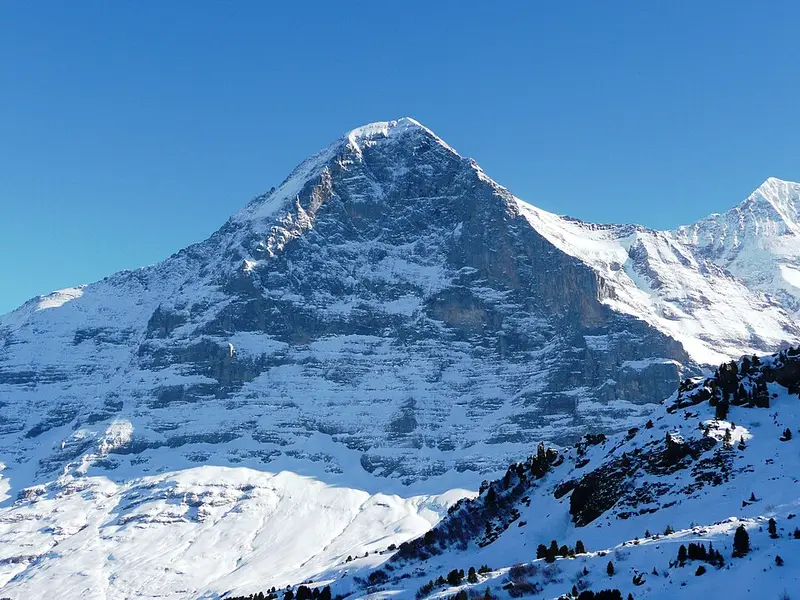
- EigerThe Eiger is a 3,967-metre mountain of the Bernese Alps, overlooking Grindelwald and Lauterbrunnen in the Bernese Oberland of Switzerland, just north of the main watershed and border with Valais.16 km
Eiger
Day 5 · 16 km from Interlaken
The most notable feature of the Eiger is its nearly 1,800-metre-high north face of rock and ice, the biggest north face in the Alps.
Wikipedia · qwesy qwesy · CC BY 3.0
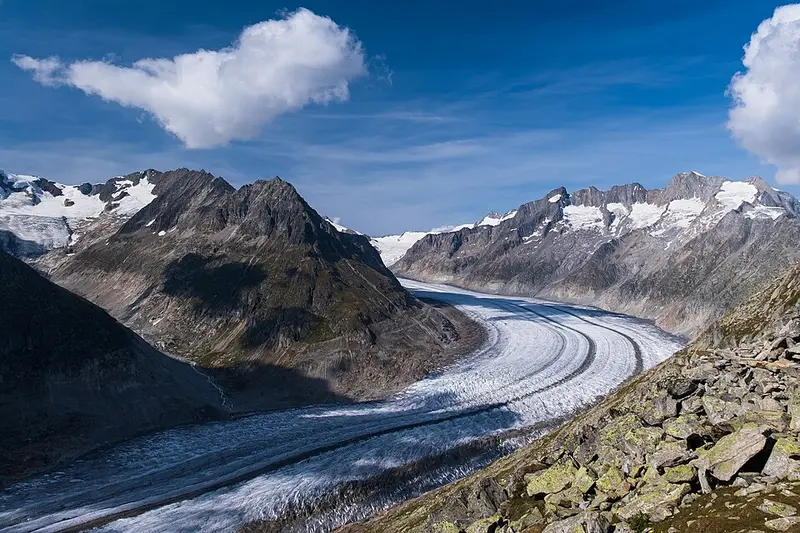
- Aletsch GlacierThe Aletsch Glacier or Great Aletsch Glacier is the largest glacier in the Alps.32 km
Aletsch Glacier
Day 5 · 32 km from Interlaken
The Aletsch Glacier or Great Aletsch Glacier is the largest glacier in the Alps.
Wikipedia · Christian David · CC BY-SA 4.0
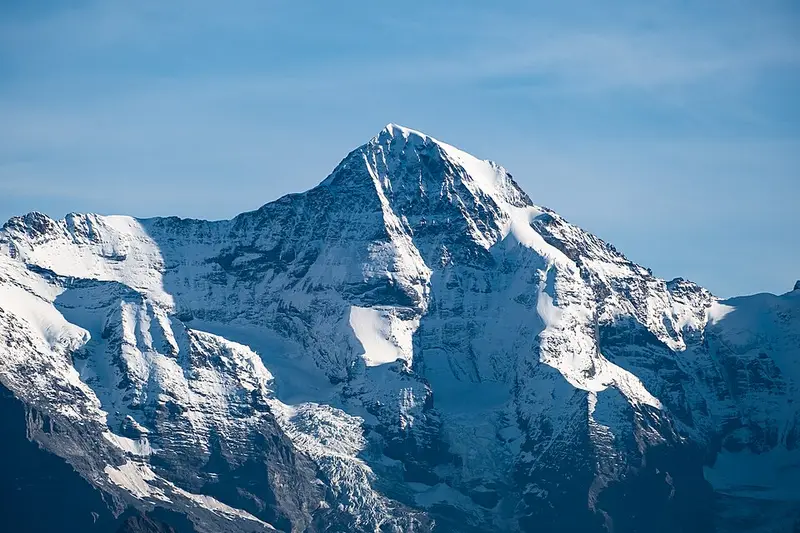
- MönchThe Mönch at 4,110 metres is a mountain in the Bernese Alps, in Switzerland.18 km
Mönch
Day 5 · 18 km from Interlaken
The summit was first climbed on record on 15 August 1857 by Christian Almer, Christian Kaufmann, Ulrich Kaufmann and Sigismund Porges.
Wikipedia · Christian David · CC BY-SA 4.0